
LiveStart Admin
A production-oriented admin dashboard for LiveStart, designed around high-density data management, OpenAPI-driven modules, and efficient CRUD workflows.
Tech Stack :
Overview
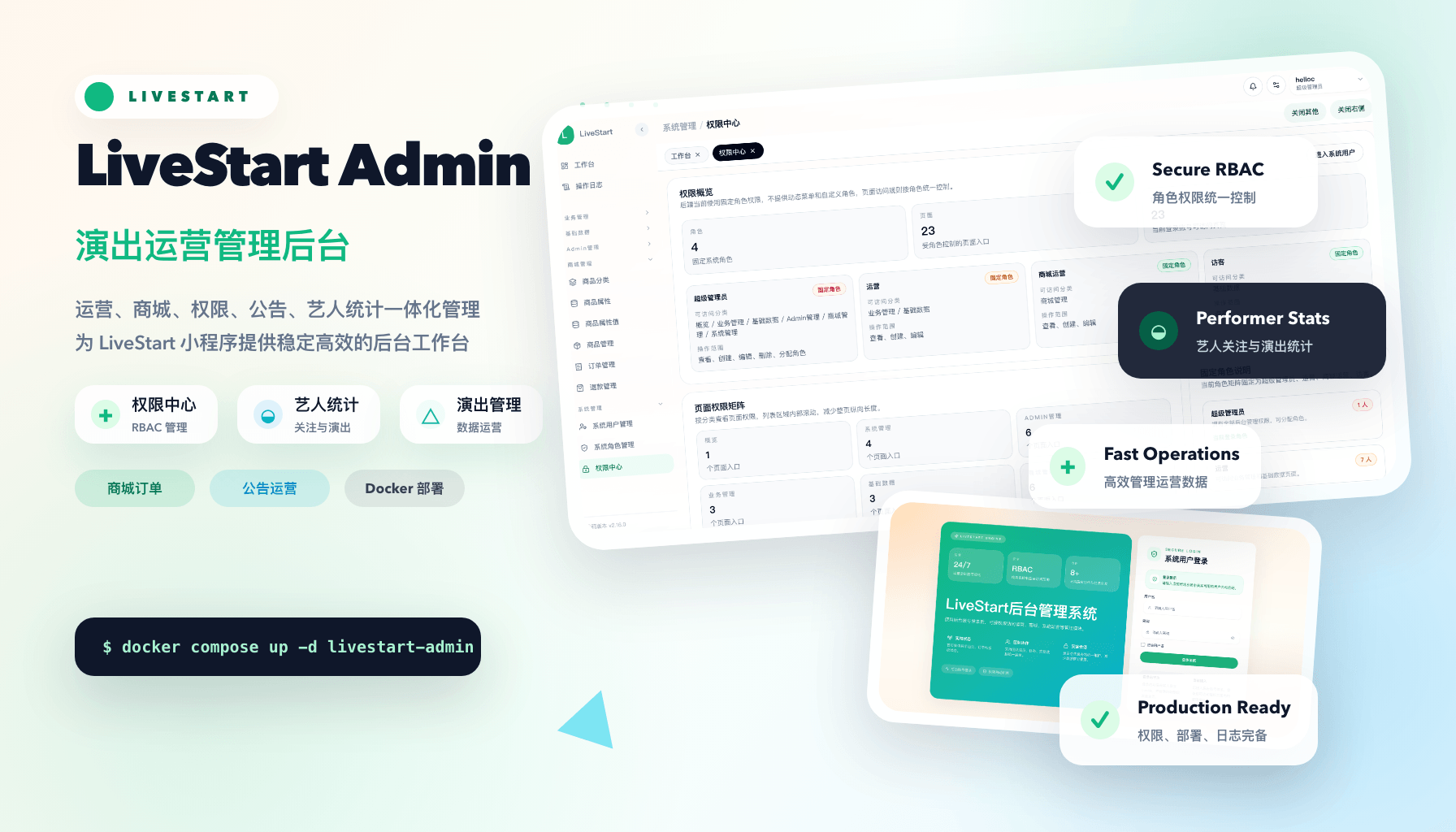
LiveStart Admin is the operation dashboard for the LiveStart product. The goal was to turn backend management capabilities into a clear, efficient interface for daily operations: browsing records, searching data, reviewing details, creating new entries, and editing existing information.
Unlike a marketing-facing website, this project is designed for repeated use by internal users. The interface prioritizes density, predictable navigation, and fast transitions between list, detail, and edit workflows.
What I Built
- A protected admin experience with login, authenticated dashboard pages, and permission-aware navigation.
- A management engine that can organize backend modules from OpenAPI metadata instead of hardcoding every page by hand.
- List-first workflows with pagination, search, detail views, create/edit pages, and delete actions.
- Right-side Sheet interactions that let users inspect or edit records without losing their current filters and pagination context.
- Entity-level configuration for modules such as cities, venues, artists, and system users.
Product Thinking
The main design decision was to keep the admin interface quiet and work-focused. Instead of building decorative dashboards, the product emphasizes table readability, stable page structure, and low-friction record operations.
For operational tools, the important question is not whether the page looks impressive at first glance, but whether users can complete the same actions many times without confusion. That shaped the interaction model around lists, Sheets, contextual editing, and module-level navigation.
Engineering Highlights
- Built with Next.js, React, Tailwind CSS, and shadcn/ui-style components.
- Uses a modular structure across layout, shared UI, API clients, navigation state, authentication, dashboard modules, engine rendering, and entity definitions.
- Separates common admin rendering logic from entity-specific configuration, making new backend modules easier to add over time.
- Keeps route pages focused on composition while reusable behavior lives in domain-oriented modules.